Attribution Creative Commons Noncommercial No Derivatives Share Alike Zero

Blue Is The Warmest Color Nonton New |top| -

As of April 2026, you can find the movie across several major platforms depending on your subscription or region: Watch Blue Is the Warmest Color

The film is also famous (and infamous) for its explicit sex scenes. These scenes sparked massive debate upon release. While the actors and director have stated these scenes were meant to portray the raw reality of the characters' connection, the filming process was later criticized by the actresses as grueling and uncomfortable to shoot.

Storytelling by colour in Blue is the Warmest Colour : r/TrueFilm blue is the warmest color nonton new

Director Abdellatif Kechiche uses extreme close-ups to capture raw, intimate details—everything from messy eating to dripping tears—making the audience feel deeply embedded in Adèle's life. What Reviewers Say

Upon its release, Blue Is the Warmest Color stunned audiences with its raw emotional honesty and intense performances. Based on the 2010 graphic novel by Julie Maroh, the film follows Adèle (Exarchopoulos), a French teenager who discovers passion and freedom when she meets Emma (Seydoux), a blue-haired art student. As of April 2026, you can find the

As of April 2026, you can "nonton" (watch) the film on several major platforms depending on your region: Subscription Services : The film is currently available on Free with Ads : You can stream it for free on The Roku Channel Rent or Buy : Digital copies are available on the Apple TV Store Google Play Fandango At Home Why It’s a Must-Watch Watch Blue Is the Warmest Color

While Blue Is the Warmest Color is highly praised, it is also a subject of intense film school debate. The movie generated significant conversation regarding the "male gaze" in cinema and the demanding conditions on set reported by the lead actresses. Engaging with these discussions enhances the viewing experience, allowing audiences to look at the film through both an aesthetic and a critical lens. Tips for the Best Viewing Experience Storytelling by colour in Blue is the Warmest

If you are planning to watch Blue Is the Warmest Color for the first time, keep the following elements in mind to maximize your viewing experience:

Available for subscribers or via the AMC+ Apple TV Channel .

Jika Anda ingin mencari alternatif film drama romantis pemenang penghargaan lainnya, saya bisa merekomendasikan daftar film sejenis beserta platform streaming resminya. Share public link

Note: Availability can change based on your region and licensing agreements. The Story: A Journey of Love and Identity
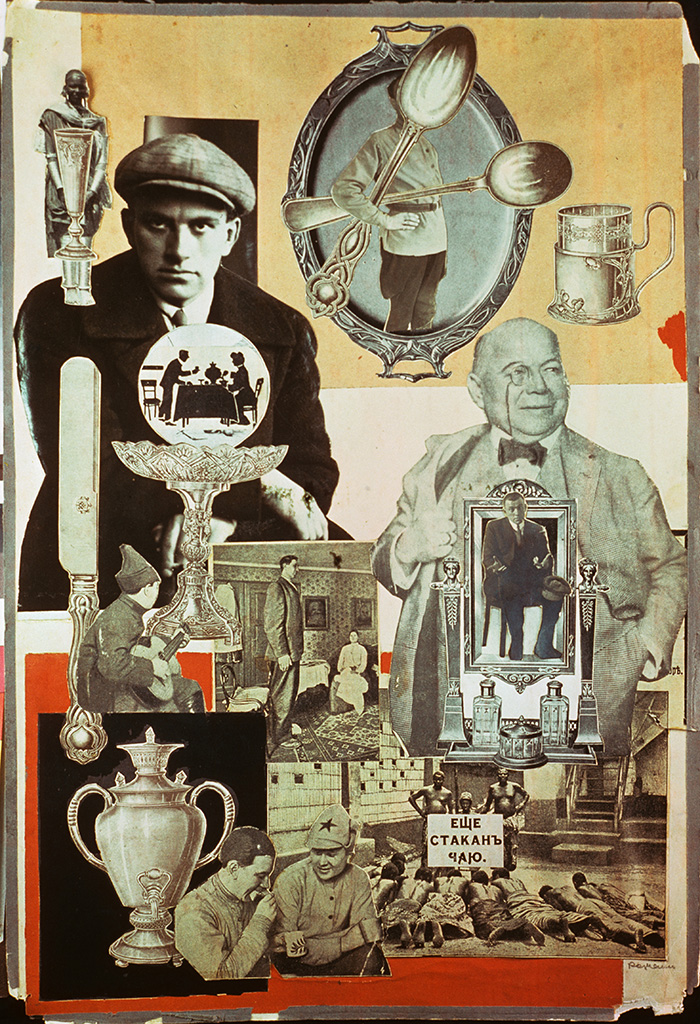
Fig. 1. — Brigade KGK (Viktor Koretsky [1909–98], Vera Gitsevich [1897–1976], and Boris Knoblok [1903–84]). “We had to overcome among the people in charge of trade the unhealthy habit of distributing goods mechanically; we had to put a stop to their indifference to the demand for a greater range of goods and to the requirements of the consumers.” From the 16th to the 17th Congress of the All-Union Communist Party (Bolsheviks), 1934, no. 57, gelatin silver print, 22.7 × 17 cm. Los Angeles, Getty Research Institute, 2014.R.25.
Fig. 2. — Brigade KGK (Viktor Koretsky [1909–98], Vera Gitsevich [1897–1976], and Boris Knoblok [1903–84]). “There is still among a section of Communists a supercilious, disdainful attitude toward trade in general, and toward Soviet trade in particular. These Communists, so-called, look upon Soviet trade as a matter of secondary importance, not worth bothering about.” From the 16th to the 17th Congress of the All-Union Communist Party (Bolsheviks), 1934, no. 56, gelatin silver print, 22.7 × 17 cm. Los Angeles, Getty Research Institute, 2014.R.25.
Collage of photographs showing Vladimir Mayakovsky surrounded by a silver samovar, cutlery, and trays; two soldiers enjoying tea; a giant man in a bourgeois parlor; and nine African men lying prostrate before three others who hold a sign that reads, in Cyrillic letters, “Another cup of tea.”
Fig. 3. — Aleksandr Rodchenko (Russian, 1890–1956). Draft illustration for Vladimir Mayakovsky’s poem “Pro eto,” accompanied by the lines “And the century stands / Unwhipped / the mare of byt won’t budge,” 1923, cut-and-pasted printed papers and gelatin silver photographs, 42.5 × 32.5 cm. Moscow, State Mayakovsky Museum. Art © 2024 Estate of Alexander Rodchenko / UPRAVIS, Moscow / ARS, NY. Photo: Art Resource.
Fig. 4. — Boris Klinch (Russian, 1892–1946). “Krovovaia sobaka,” Noske (“The bloody dog,” Noske), photomontage, 1932. From Proletarskoe foto, no. 11 (1932): 29. Los Angeles, Getty Research Institute, 85-S956.
Fig. 5. — Brigade KGK (Viktor Koretsky [1909–98], Vera Gitsevich [1897–1976], and Boris Knoblok [1903–84]). “We have smashed the enemies of the Party, the opportunists of all shades, the nationalist deviators of all kinds. But remnants of their ideology still live in the minds of individual members of the Party, and not infrequently they find expression.” From the 16th to the 17th Congress of the All-Union Communist Party (Bolsheviks), 1934, no. 62, gelatin silver print, 22.7 × 17 cm. Los Angeles, Getty Research Institute, 2014.R.25.
Fig. 6. — Brigade KGK (Viktor Koretsky [1909–98], Vera Gitsevich [1897–1976], and Boris Knoblok [1903–84]). “There are two other types of executive who retard our work, hinder our work, and hold up our advance. . . . People who have become bigwigs, who consider that Party decisions and Soviet laws are not written for them, but for fools. . . . And . . . honest windbags (laughter), people who are honest and loyal to Soviet power, but who are incapable of leadership, incapable of organizing anything.” From the 16th to the 17th Congress of the All-Union Communist Party (Bolsheviks), 1934, no. 70, gelatin silver print, 22.7 × 17 cm. Los Angeles, Getty Research Institute, 2014.R.25.
Fig. 7. — Artist unknown. “The Social Democrat Grzesinski,” from Proletarskoe foto, no. 3 (1932): 7. Los Angeles, Getty Research Institute, 85-S956.
Fig. 8A. — Pavel Petrov-Bytov (Russian, 1895–1960), director. Screen capture from the film Cain and Artem, 1929. Image courtesy University of California, Berkeley, Berkeley Art Museum and Pacific Film Archive Library.
Fig. 8B. — Pavel Petrov-Bytov (Russian, 1895–1960), director. Screen capture from the film Cain and Artem, 1929. Image courtesy University of California, Berkeley, Berkeley Art Museum and Pacific Film Archive Library.
Fig. 8C. — Pavel Petrov-Bytov (Russian, 1895–1960), director. Screen capture from the film Cain and Artem, 1929. Image courtesy University of California, Berkeley, Berkeley Art Museum and Pacific Film Archive Library.
Fig. 9. — Herbert George Ponting (English, 1870–1935). Camera Caricature, ca. 1927, gelatin silver prints mounted on card, 49.5 × 35.6 cm (grid). London, Victoria and Albert Museum, RPS.3336–2018. Image © Royal Photographic Society Collection / Victoria and Albert Museum, London.
Fig. 10. — Aleksandr Zhitomirsky (Russian, 1907–93). “There are lucky devils and unlucky ones,” cover of Front-Illustrierte, no. 10, April 1943. Prague, Ne Boltai! Collection. Art © Vladimir Zhitomirsky.
of