

Faster than Evernote or OneNote
Zero clutter, zero setup
Better than paper notes
Never lose your ideas again
Free online sticky notes collaboration
Ideal for remote teams
Anonymous sticky notes online
 Loved by
10,000+ teams and students.
Loved by
10,000+ teams and students.
Don't let your ideas disappear. Write, organize, and share them instantly.

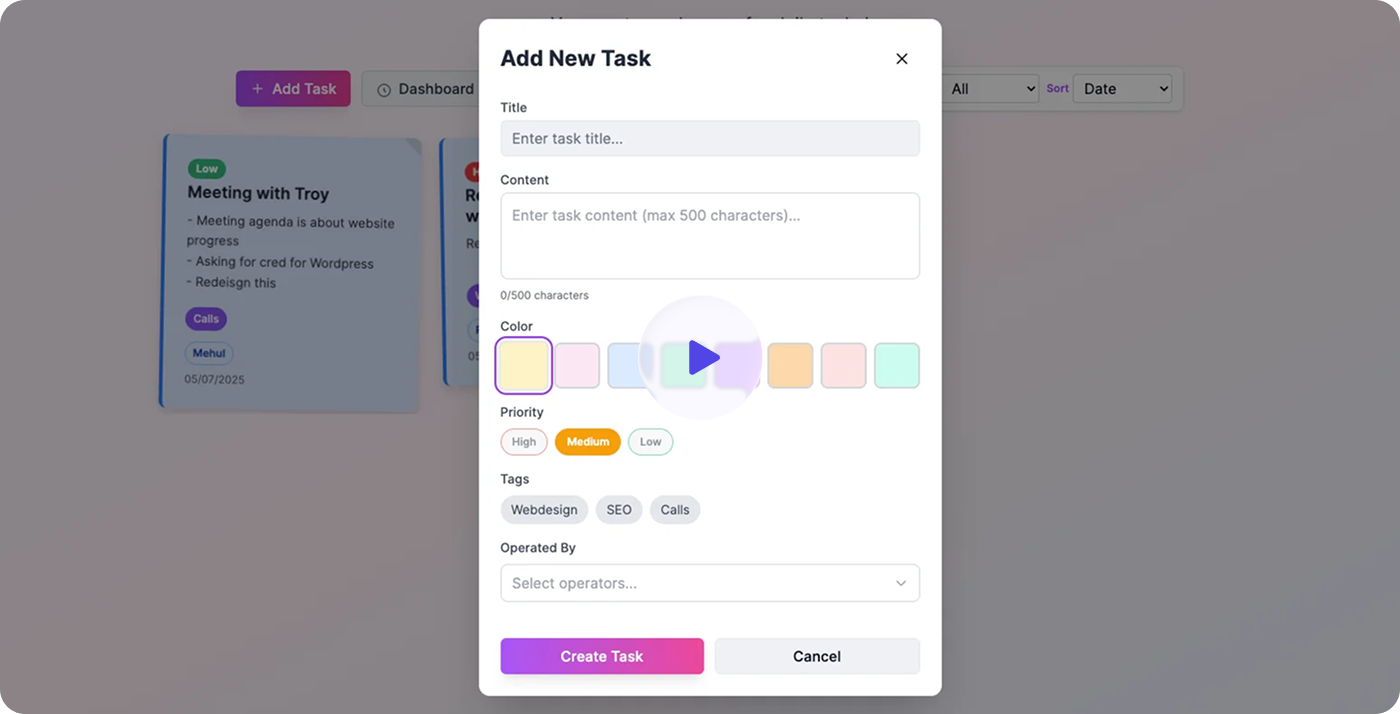
Snapynotes is more than just a sticky note website. It’s a lightweight, clutter-free quick note app designed for personal use, teams, and classrooms. Whether you need a simple online notepad or a virtual sticky note board free for collaboration, Snapynotes makes note-taking effortless.

Create unlimited digital sticky notes instantly

Share with friends, teams, or students via a simple link

Use on desktop, mobile, or tablet – anywhere, anytime

Organize ideas with colors, labels, and digital sticky notes.

Free to use, secure, and privacy-friendly
Just visit appsnapynotes.com and sign up
Add colorful sticky notes, move or organize them on your board
Import or export notes securely with Snapy notes use online anytime, no setup
Faster than Evernote or OneNote
Better than paper notes
Free online sticky notes collaboration
Anonymous sticky notes online

Once everything is connected, the QA engineer can launch a battery of tests—from verifying boot performance to checking battery charging curves—all without human intervention. The results are logged, analyzed, and compared against Google's internal baselines.
(with 100MB/month free), and a specialized keyboard that replaced Caps Lock with a Search key. Performance
This was not a device meant for store shelves. Instead, the CR-48 was distributed through a special "Pilot Program" to developers, businesses, and tech enthusiasts. By applying to the program, these early adopters received the free device and, in return, provided critical feedback to Google. This private-public beta test was crucial for shaping what would eventually become the first commercially available Chromebooks from Samsung and Acer. google cr48 vs wyvern moblab
While one was a consumer-facing notebook designed to test a new operating system, the other is a headless desktop workstation engineered to automate testing for the entire modern ChromeOS ecosystem. At a Glance: Hardware Specifications Comparison How to install Windows 10/11 on a Chromebook - CoolStar
"I was a prototype," the Cr-48 snapped back. "I was meant to be broken. That’s why Google gave me away for free to anyone they 'deemed worthy'". Once everything is connected, the QA engineer can
The CR-48 was Google’s "stealth bomber" for the cloud. The Wyvern MoblAb (Mobile Laboratory) is a ruggedized, carrier-grade network analysis and penetration testing platform.
Designed for hardware manufacturers (OEMs), firmware engineers, and enterprise quality assurance labs deploying thousands of fleet devices. Operating Philosophy Performance This was not a device meant for store shelves
The and Wyvern MoblAb are both mobile computers, but they live in different galaxies. The CR-48 looked to the sky (the cloud) and said, "Let us surrender our data to be free of the drive." The MoblAb looks to the ground (the RF spectrum) and says, "Let us capture every wave to be free of the cloud."
The (codename: "Mario") was not a product; it was a statement. In December 2010, Google mailed 60,000 of these laptops to random applicants as part of the "Chrome OS Pilot Program." The device was intentionally ugly: a 12.1-inch screen, an anemic Intel Atom N455 processor, and a "3G" chip that offered 100MB of free Verizon data per month. The hardware was so unremarkable that the only distinctive feature was a rubberized coating designed to hide dirt. Google’s goal was radical: prove that the OS is the browser. The CR-48 had no Caps Lock key (replaced by a Search key), no hard drive (only an SSD for caching), and no local applications. It was a terminal to the cloud.
was the first physical Chromebook, released in 2010 to a limited number of pilot program participants. It was designed to test the feasibility of a cloud-only operating system.
Ready to make your notes smarter?
Once everything is connected, the QA engineer can launch a battery of tests—from verifying boot performance to checking battery charging curves—all without human intervention. The results are logged, analyzed, and compared against Google's internal baselines.
(with 100MB/month free), and a specialized keyboard that replaced Caps Lock with a Search key. Performance
This was not a device meant for store shelves. Instead, the CR-48 was distributed through a special "Pilot Program" to developers, businesses, and tech enthusiasts. By applying to the program, these early adopters received the free device and, in return, provided critical feedback to Google. This private-public beta test was crucial for shaping what would eventually become the first commercially available Chromebooks from Samsung and Acer.
While one was a consumer-facing notebook designed to test a new operating system, the other is a headless desktop workstation engineered to automate testing for the entire modern ChromeOS ecosystem. At a Glance: Hardware Specifications Comparison How to install Windows 10/11 on a Chromebook - CoolStar
"I was a prototype," the Cr-48 snapped back. "I was meant to be broken. That’s why Google gave me away for free to anyone they 'deemed worthy'".
The CR-48 was Google’s "stealth bomber" for the cloud. The Wyvern MoblAb (Mobile Laboratory) is a ruggedized, carrier-grade network analysis and penetration testing platform.
Designed for hardware manufacturers (OEMs), firmware engineers, and enterprise quality assurance labs deploying thousands of fleet devices. Operating Philosophy
The and Wyvern MoblAb are both mobile computers, but they live in different galaxies. The CR-48 looked to the sky (the cloud) and said, "Let us surrender our data to be free of the drive." The MoblAb looks to the ground (the RF spectrum) and says, "Let us capture every wave to be free of the cloud."
The (codename: "Mario") was not a product; it was a statement. In December 2010, Google mailed 60,000 of these laptops to random applicants as part of the "Chrome OS Pilot Program." The device was intentionally ugly: a 12.1-inch screen, an anemic Intel Atom N455 processor, and a "3G" chip that offered 100MB of free Verizon data per month. The hardware was so unremarkable that the only distinctive feature was a rubberized coating designed to hide dirt. Google’s goal was radical: prove that the OS is the browser. The CR-48 had no Caps Lock key (replaced by a Search key), no hard drive (only an SSD for caching), and no local applications. It was a terminal to the cloud.
was the first physical Chromebook, released in 2010 to a limited number of pilot program participants. It was designed to test the feasibility of a cloud-only operating system.