Nand Usb2disk Usb Device Driver Site
If you have encountered this driver, you are now equipped with the knowledge to identify the root cause and take the appropriate action. For those who wish to proceed with a re-flash attempt, community forums like usbdev.ru , flashboot.ru , or Elektroda.pl are valuable resources for finding the precise MPTool version and detailed guides for your specific controller.
Many USB drive manufacturers (especially lesser-known brands or unbranded drives) use chipset controllers from companies like Alcor, Chipsbank, or SMI. These controllers report a generic "NAND USB2DISK" name when the correct driver isn’t loaded or when Windows falls back to a default driver.
Before giving up on the drive, you can try these steps to get it recognized again:
Right-click the Windows Start button and select . Expand the Disk drives category.
Checking the drive properties reveals 0 bytes used, 0 bytes free .
The drive appears in Disk Management but shows "0 bytes" or "No Media," making it unreadable by standard file explorers.
Right-click the problematic device and select . Disconnect the USB drive from the computer. Restart your computer.
If none of the above methods resolve the issue, suspect:
If you have ever plugged in a no-name USB flash drive (the kind you get at a trade show or a gas station) and seen it show up as a USB2Disk or General USB Flash Disk , you have interfaced with a surprisingly complex piece of engineering.
In , right-click the NAND USB2Disk device and select Uninstall device . Unplug the USB device. Restart your computer.
When this drive malfunctions, it’s rarely a software issue. The problem is almost always tied directly to the hardware. The device's behavior—disappearing, showing the wrong capacity, or being unreadable—is a classic symptom of a deeper problem.
The internal software that tells the USB controller how to talk to the memory has crashed.
H -- Success --> J[Drive Restored.<br>Perform a full format and test capacity with tools like H2testw.] H -- Failure / MPTool cannot initialize NAND --> K[Drive likely has a physical hardware failure.<br>Consider disposal as repair is improbable.]
How to Install Windows® 10 To A GUID Partition Table (GPT)
Properly Install Windows® 10 on Your Storage Disk With UEFI Enabled In The System BIOS And The GPT (GUID Partition Table) Created
Summary
We recommend performing Windows® 10 installations enabling UEFI with a GUID Partition Table (GPT).
Some features may not be available if you use the Master Boot Record (MBR) style partition table.
Configure a system to install an OS to a GUID Partition Table (GPT) partition
| Note |
- We highly recommended performing a backup of your data. If you have a second disk drive with enough available capacity, you can create a system image and recover the full installation as it was before you started this procedure.
- Screenshots and directions below are examples. Consult with your motherboard or system manufacturer for specific BIOS instructions.
|
- Connect a USB Windows® 10 UEFI install key
- Boot the system into the BIOS (for example, using "F2" or the "Delete" key)
- Locate the "Boot Options Menu"
- Set Launch CSM to "Enabled." If CSM is set to "Disabled," you can skip to step 8 below
- Set Boot Device Control to "UEFI Only"
- Set Boot from Storage Devices to UEFI driver first
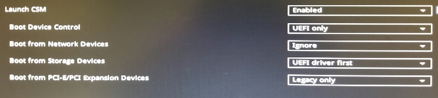
- Save your changes and restart the system.
- Reenter the BIOS (for example, using "F2" or the "Delete" key).
- Confirm in the Boot Priority List that the "USB UEFI OS Boot" option is at the top of the list.
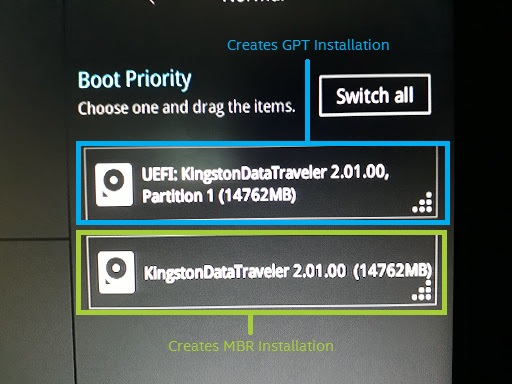
- Reboot the system and install Windows* as usual.
Confirm that Windows* is installed to a GPT partition. nand usb2disk usb device driver
- Boot into Windows*
- Open Disk Manager (For Windows® 10, press the "Windows*" key and the "X" key simultaneously, then click "Disk Manager"). You see three partitions including the EFI System Partition.
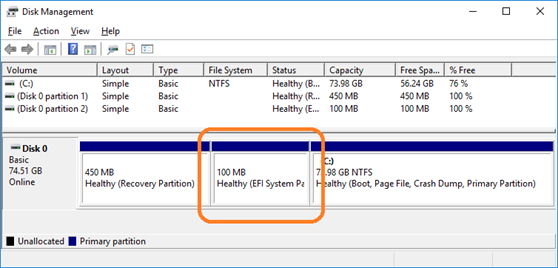
3. Right-click the disk shown as (Disk x, Basic, Capacity, Online) on the left
4. Select "Properties"
5. Click the "Volumes" tab. Here you can confirm the "Partition style".
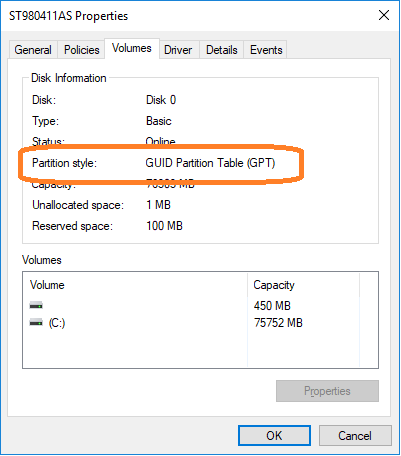
Questions? Check out our Community Forum for help. If you have encountered this driver, you are
Issues? Contact Solidigm™ Customer Support:
[Chinese] [English] [German] [Japanese] [Korean]
If you have encountered this driver, you are now equipped with the knowledge to identify the root cause and take the appropriate action. For those who wish to proceed with a re-flash attempt, community forums like usbdev.ru , flashboot.ru , or Elektroda.pl are valuable resources for finding the precise MPTool version and detailed guides for your specific controller.
Many USB drive manufacturers (especially lesser-known brands or unbranded drives) use chipset controllers from companies like Alcor, Chipsbank, or SMI. These controllers report a generic "NAND USB2DISK" name when the correct driver isn’t loaded or when Windows falls back to a default driver.
Before giving up on the drive, you can try these steps to get it recognized again:
Right-click the Windows Start button and select . Expand the Disk drives category.
Checking the drive properties reveals 0 bytes used, 0 bytes free .
The drive appears in Disk Management but shows "0 bytes" or "No Media," making it unreadable by standard file explorers.
Right-click the problematic device and select . Disconnect the USB drive from the computer. Restart your computer.
If none of the above methods resolve the issue, suspect:
If you have ever plugged in a no-name USB flash drive (the kind you get at a trade show or a gas station) and seen it show up as a USB2Disk or General USB Flash Disk , you have interfaced with a surprisingly complex piece of engineering.
In , right-click the NAND USB2Disk device and select Uninstall device . Unplug the USB device. Restart your computer.
When this drive malfunctions, it’s rarely a software issue. The problem is almost always tied directly to the hardware. The device's behavior—disappearing, showing the wrong capacity, or being unreadable—is a classic symptom of a deeper problem.
The internal software that tells the USB controller how to talk to the memory has crashed.
H -- Success --> J[Drive Restored.<br>Perform a full format and test capacity with tools like H2testw.] H -- Failure / MPTool cannot initialize NAND --> K[Drive likely has a physical hardware failure.<br>Consider disposal as repair is improbable.]