Vs Negro Better !!better!!: Video Sex Bule Virgin
Easily manage and swap NVIDIA DLSS versions for optimal gaming performance
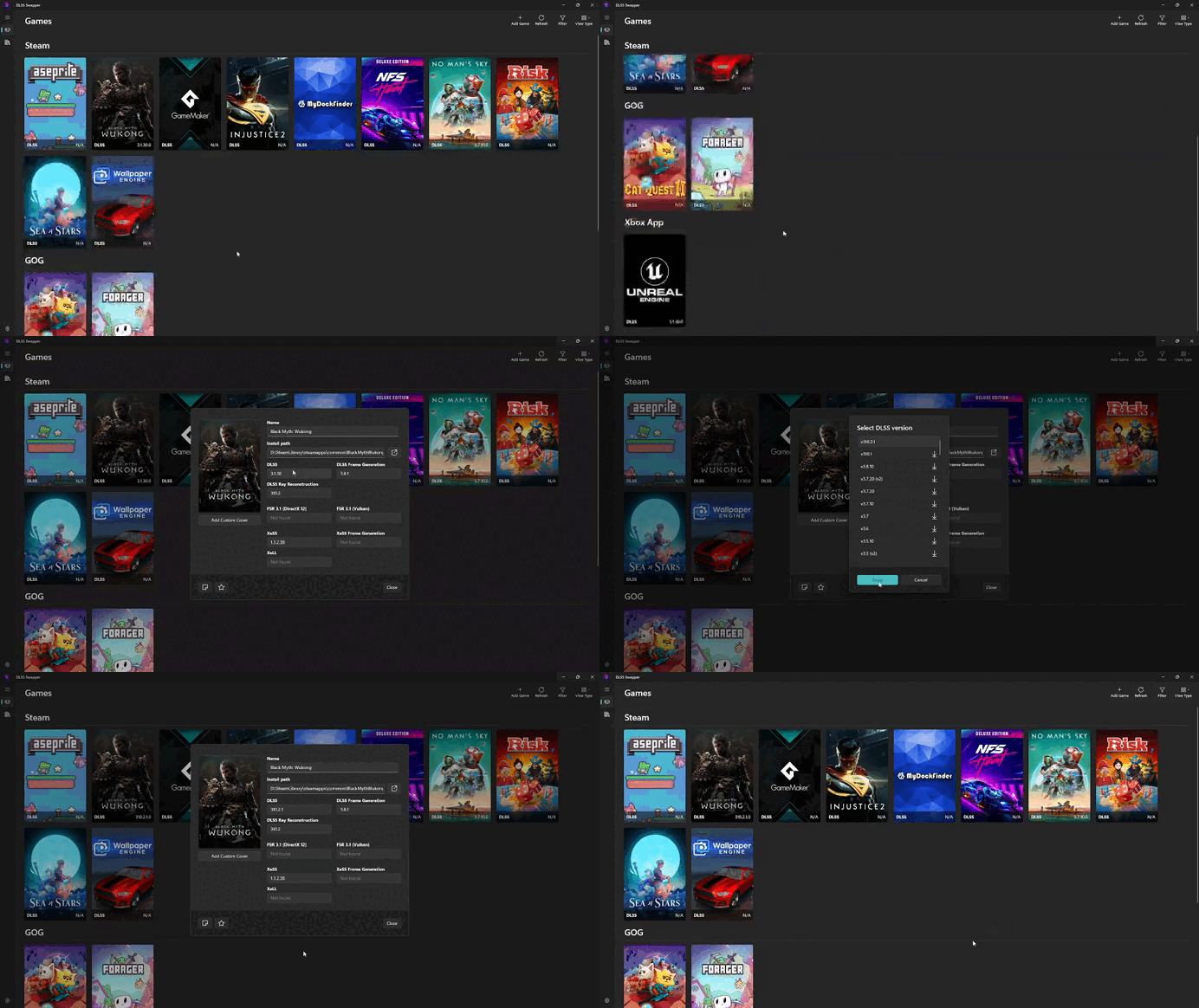
Easily manage and swap NVIDIA DLSS versions for optimal gaming performance
DLSS Swapper is an open-source tool designed to allow users to easily swap between different versions of NVIDIA's Deep Learning Super Sampling (DLSS) technology in games. This tool enables gamers to optimize their gaming experience by upgrading or downgrading the DLSS version used in a game, which can improve performance, image quality, or compatibility.
What sets DLSS Swapper apart is its comprehensive support for multiple upscaling technologies. Beyond NVIDIA DLSS, it also supports AMD FSR 3.1 and Intel XeSS upscaling libraries, making it a versatile tool for managing various upscaling technologies in games.
Switch between different DLSS versions to achieve the best balance of performance and visual fidelity
Automatically detects installed DLSS version in games, no manual file searching needed
Automatic backup system ensures your game files are always protected
Swap DLSS versions with a single click, making experimentation easy
Compare and test different DLSS versions in real-time for optimal performance
Clean and intuitive interface accessible to both beginners and advanced users
Go to DLSS-Swapper.Com and download the latest version. Choose between an installer or portable version.
Run the installer for a full installation, or extract the portable version to any folder of your choice.
Launch the application and it will automatically detect your installed DLSS-enabled games.
Select a game, choose your preferred DLSS version, and click to apply the changes.
Relationships introduce personal stakes, making the plot feel more urgent and emotionally charged.
Many readers find the love triangle and the distinct personalities of Simon and Declan to be highlights of the series. The relationships are described as well-drawn and "deeply human".
This article dissects the "Bule Virgin" vs. the messy reality of relationships and romantic storylines, exploring how media, cultural pressure, and personal identity collide. video sex bule virgin vs negro better
While fiction focuses on melodrama, real-world cross-cultural relationships face practical hurdles when dealing with these themes.
We see this tension in "Liminal Space" fiction, lo-fi aesthetics, and modern "sad girl/boy" media. Audiences are increasingly drawn to characters who choose their own solitude over a mediocre relationship. This article dissects the "Bule Virgin" vs
In many romance-adjacent manga and coming-of-age stories, the concept of a "Blue Virgin"—or characters who are inexperienced yet deeply emotional—serves as a powerful lens to explore the difference between idealized tropes and realistic relationship dynamics. The Virgin Trope vs. Real Connection
The Bule Virgin learns quickly that her body—and her choices about it—is a public manuscript that everyone feels entitled to read and edit. We see this tension in "Liminal Space" fiction,
Unlike Western romantic storylines that focus heavily on the individual couple, cross-cultural storylines must navigate communal involvement. The progression of the relationship requires winning over extended family members, understanding religious boundaries, and respecting local laws regarding courtship. 4. The Path to Commitment
In the sprawling digital cafes of Ubud, the high-rise apartments of Jakarta, and the backpacker hostels of Chiang Mai, a quiet but persistent archetype haunts the conversation. It is the figure of the
This essay explores the dynamic between the "blue virgin"—a character trope often defined by innocence, emotional distance, or a specific brand of melancholic purity—and the complex machinery of romantic storylines. The Archetype of the Blue Virgin
, this is a detailed request for a long article on a very specific keyword phrase: "bule virgin vs relationships and romantic storylines." First, I need to parse what "bule virgin" means. In Indonesian slang, "bule" refers to a foreigner, typically a white Westerner. So "bule virgin" likely means a Westerner who is inexperienced in navigating local dating/relationship cultures in a place like Indonesia or another Southeast Asian context. The "vs relationships and romantic storylines" suggests a comparison or tension between this archetype and how romance is portrayed in local media (soap operas, films, novels).