
Zooskool Strayx The Record Part 2 8 Dogs In 1 Day Animal Zoo Beast Bestiality Farm Barn Fuck Upd <2026>
State of the art timing analysis
with industry-hardened methods and tools.
State of the art timing analysis
with industry-hardened methods and tools.
...with industry-hardened methods and tools. T1 empowers and enables. T1 is the most frequently deployed timing tool in the automotive industry , being used for many years in hundreds of mass-production projects.
As a worldwide premiere, the ISO 26262 ASIL‑D certified T1-TARGET-SW allows safe instrumentation based timing analysis and timing supervision. In the car. In mass-production.
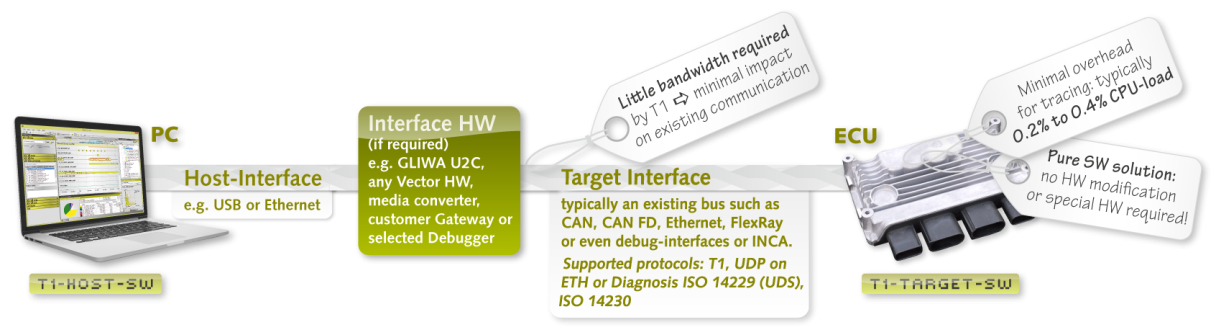
T1.timing comes with two extension options. Add-on product T1.streaming provides the possibility to stream trace data continuously — over seconds, minutes, hours or even days. Add-on product T1.posix supports POSIX operating systems such as Linux or QNX.
T1.timing comes with a modular concept and several plug-ins which are described in the following. Plug-ins can be easily enabled or disabled at compile-time using dedicated compiler switches such as T1_DISABLE_T1_CONT. To disable T1 altogether, it is sufficient to disable compiler switch T1_ENABLE which leaves the system in a state as of before the T1 integration.
where animals possess inherent rights similar to humans. Proponents argue that animals should not be regarded as property or resources, seeking to abolish systems of exploitation entirely, including industrial farming and animal testing. 2. Recent Legislative Developments (2025–2026)
Understanding the core differences between these two concepts is essential for analyzing modern advocacy, legislation, and ethical debates. ⚖️ At a Glance: Welfare vs. Rights
This review examines the shifting landscape of animal welfare and rights as of early 2026, exploring the philosophical divide between the two concepts, recent legislative milestones, and emerging global trends. 1. Conceptual Distinction: Welfare vs. Rights
The animal rights framework rejects the premise that animals are human property or resources. The ultimate goal of the animal rights movement is abolitionist: to end all forms of animal exploitation, including factory farming, animal testing, circuses, and, in strict interpretations, pet ownership. Major Pillars of Concern
The Moral Compass: Navigating the Landscape of Animal Welfare and Rights
For centuries, the relationship between humans and animals was defined purely by utility. Animals were tools for labor, sources of food, or materials for clothing. However, as our understanding of biology, neuroscience, and ethics has evolved, so has our collective conscience. Today, the conversation surrounding "animal welfare" and "animal rights" is a central pillar of modern ethics, reflecting a profound shift in how we view our fellow inhabitants of Earth.
The formally acknowledged that non-human animals have the neurological substrates that generate consciousness. This scientific backing has fueled a global movement to upgrade animal protections from mere "anti-cruelty" laws to comprehensive rights frameworks. Modern Challenges and Progress
While often used interchangeably, welfare and rights represent two distinct philosophical approaches to the same goal: reducing suffering. Understanding Animal Welfare: The Standard of Care
By aligning legal frameworks with modern neuroscience, supporting sustainable food technologies, and making conscious consumer choices, society can dismantle systemic cruelty. Protecting animals is not merely an act of charity; it is a fundamental reflection of human justice and environmental survival.
The debate manifests across several major industries and practices globally. Industrial Agriculture (Factory Farming)
For POSIX-based projects, see T1.posix.
where animals possess inherent rights similar to humans. Proponents argue that animals should not be regarded as property or resources, seeking to abolish systems of exploitation entirely, including industrial farming and animal testing. 2. Recent Legislative Developments (2025–2026)
Understanding the core differences between these two concepts is essential for analyzing modern advocacy, legislation, and ethical debates. ⚖️ At a Glance: Welfare vs. Rights
This review examines the shifting landscape of animal welfare and rights as of early 2026, exploring the philosophical divide between the two concepts, recent legislative milestones, and emerging global trends. 1. Conceptual Distinction: Welfare vs. Rights where animals possess inherent rights similar to humans
The animal rights framework rejects the premise that animals are human property or resources. The ultimate goal of the animal rights movement is abolitionist: to end all forms of animal exploitation, including factory farming, animal testing, circuses, and, in strict interpretations, pet ownership. Major Pillars of Concern
The Moral Compass: Navigating the Landscape of Animal Welfare and Rights supporting sustainable food technologies
For centuries, the relationship between humans and animals was defined purely by utility. Animals were tools for labor, sources of food, or materials for clothing. However, as our understanding of biology, neuroscience, and ethics has evolved, so has our collective conscience. Today, the conversation surrounding "animal welfare" and "animal rights" is a central pillar of modern ethics, reflecting a profound shift in how we view our fellow inhabitants of Earth.
The formally acknowledged that non-human animals have the neurological substrates that generate consciousness. This scientific backing has fueled a global movement to upgrade animal protections from mere "anti-cruelty" laws to comprehensive rights frameworks. Modern Challenges and Progress and making conscious consumer choices
While often used interchangeably, welfare and rights represent two distinct philosophical approaches to the same goal: reducing suffering. Understanding Animal Welfare: The Standard of Care
By aligning legal frameworks with modern neuroscience, supporting sustainable food technologies, and making conscious consumer choices, society can dismantle systemic cruelty. Protecting animals is not merely an act of charity; it is a fundamental reflection of human justice and environmental survival.
The debate manifests across several major industries and practices globally. Industrial Agriculture (Factory Farming)
| Vendor | Operating System |
|---|---|
| Customer | Any in-house OS** |
| Customer | No OS - scheduling loop plus interrupts** |
| Elektrobit | EB tresos AutoCore OS |
| Elektrobit | EB tresos Safety OS |
| ETAS | RTA-OS |
| GLIWA | gliwOS |
| HighTec | PXROS-HR |
| Hyundai AutoEver | Mobilgene |
| KPIT Cummins | KPIT** |
| Siemens | Capital VSTAR OS |
| Micriμm | μC/OS-II** |
| Vector | MICROSAR-OS |
| Amazon Web Services | FreeRTOS** |
| WITTENSTEIN high integrity systems | SafeRTOS** |
| Qorix | Qorix Classic |
| Embedded Office | Flexible Safety RTOS |
(**) T1 OS adaptation package T1-ADAPT-OS required.
| Target Interface | Comment |
|---|---|
| CAN | Low bandwidth requirement: typically one CAN message every 1 to 10ms. The bandwidth consumed by T1 is scalable and strictly deterministic. |
| CAN FD | Low bandwidth requirement: typically one CAN message every 1 to 10ms. The bandwidth consumed by T1 is scalable and strictly deterministic. |
| Diagnostic Interface | The diagnostic interface supports ISO14229 (UDS) as well as ISO14230, both via CAN with transportation protocol ISO15765-2 (addressing modes 'normal' and 'extended'). The T1-HOST-SW connects to the Diagnostic Interface using CAN. |
| Ethernet (IP:TCP, UDP) | TCP and UDP can be used, IP-address and port can be configured. |
| FlexRay | FlexRay is supported via the diagnostic interface and a CAN bridge. |
| Serial Line | Serial communication (e.g. RS232) is often used if no other communication interfaces are present. On the PC side, an USB-to-serial adapter is necessary. |
| JTAG/DAP | Interfaces exist to well-known debug environments such as Lauterbach TRACE32, iSYSTEM winIDEA and PLS UDE. The T1 JTAG interface requires an external debugger to be connected and, for data transfer, the target is halted. TriCore processors use DAP instead of JTAG. |
